
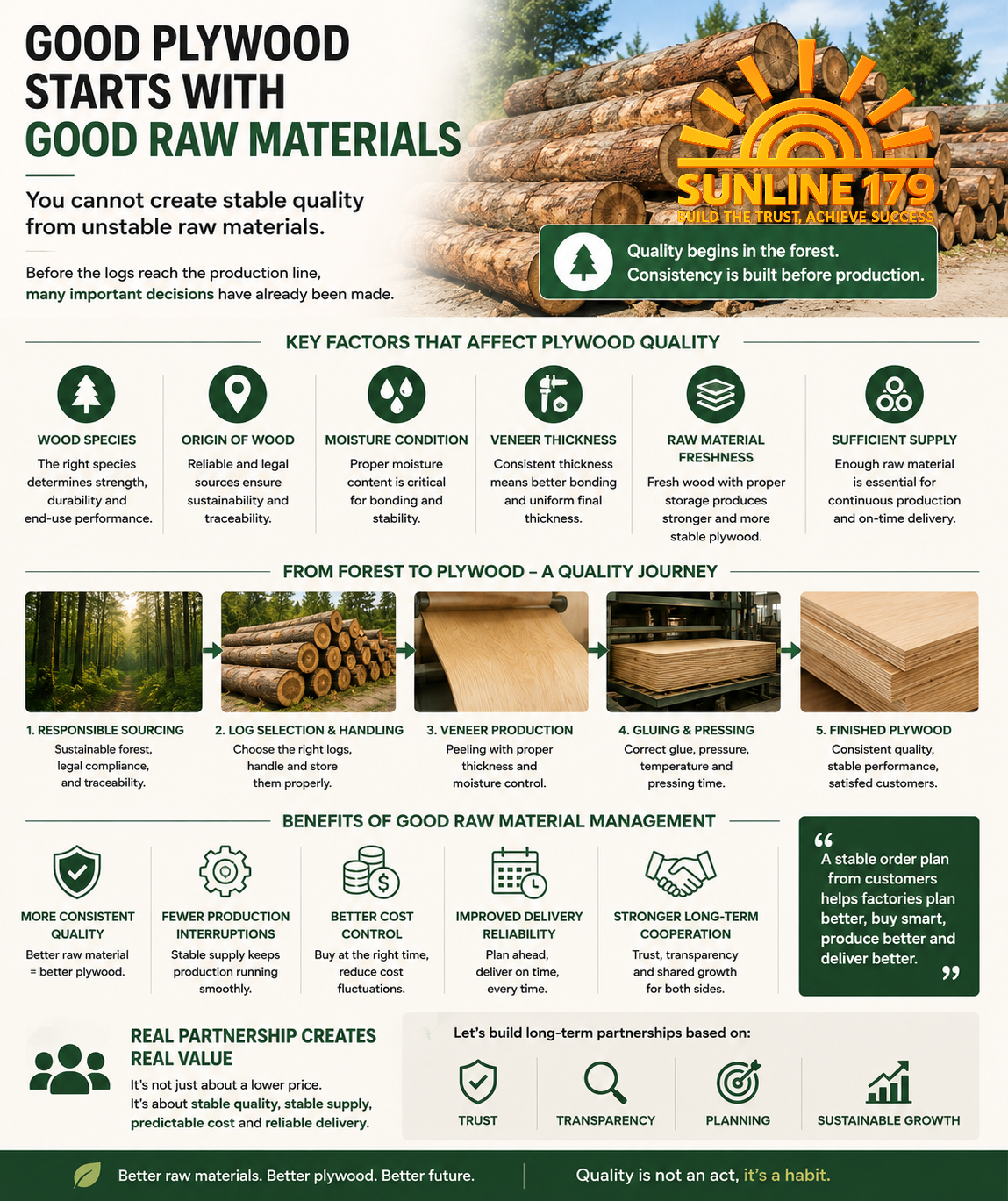
But before the logs reach the peeling machine, many decisions have already been made:
• What wood species are being used?
• Where does the wood come from?
• Is the raw material fresh or has it been stored too long?
• What is the moisture condition?
• Is the veneer thickness consistent?
• How much raw material is available for continuous production?
These factors directly affect the final plywood.
In reality, raw material purchasing is also part of quality control.
When raw material prices are low and weather conditions are favorable, a well-managed factory should think ahead — purchasing and properly storing sufficient raw materials to support future production.
This can help the factory:
✓ Maintain more consistent quality
✓ Reduce production interruptions
✓ Control production costs
✓ Avoid buying raw materials at peak prices
✓ Improve delivery reliability
Of course, storing raw materials also requires capital and proper management.
That is why I believe long-term cooperation between buyer and factory is important.
When a buyer can provide a stable monthly order plan, the factory has a better opportunity to plan raw material procurement and production in advance.
The result should not simply be a lower price.
It should be:
Stable quality + stable supply + predictable cost + reliable delivery.
This is how I believe a real long-term plywood partnership should work.
I would like to hear from manufacturers and buyers:
Do you think a stable purchasing plan from customers can significantly help a plywood factory control raw material costs and maintain consistent quality?
#Plywood #WoodIndustry #PlywoodManufacturing #WoodProducts #Sourcing #Manufacturing #SupplyChain #PlywoodExport #SustainableBusiness