
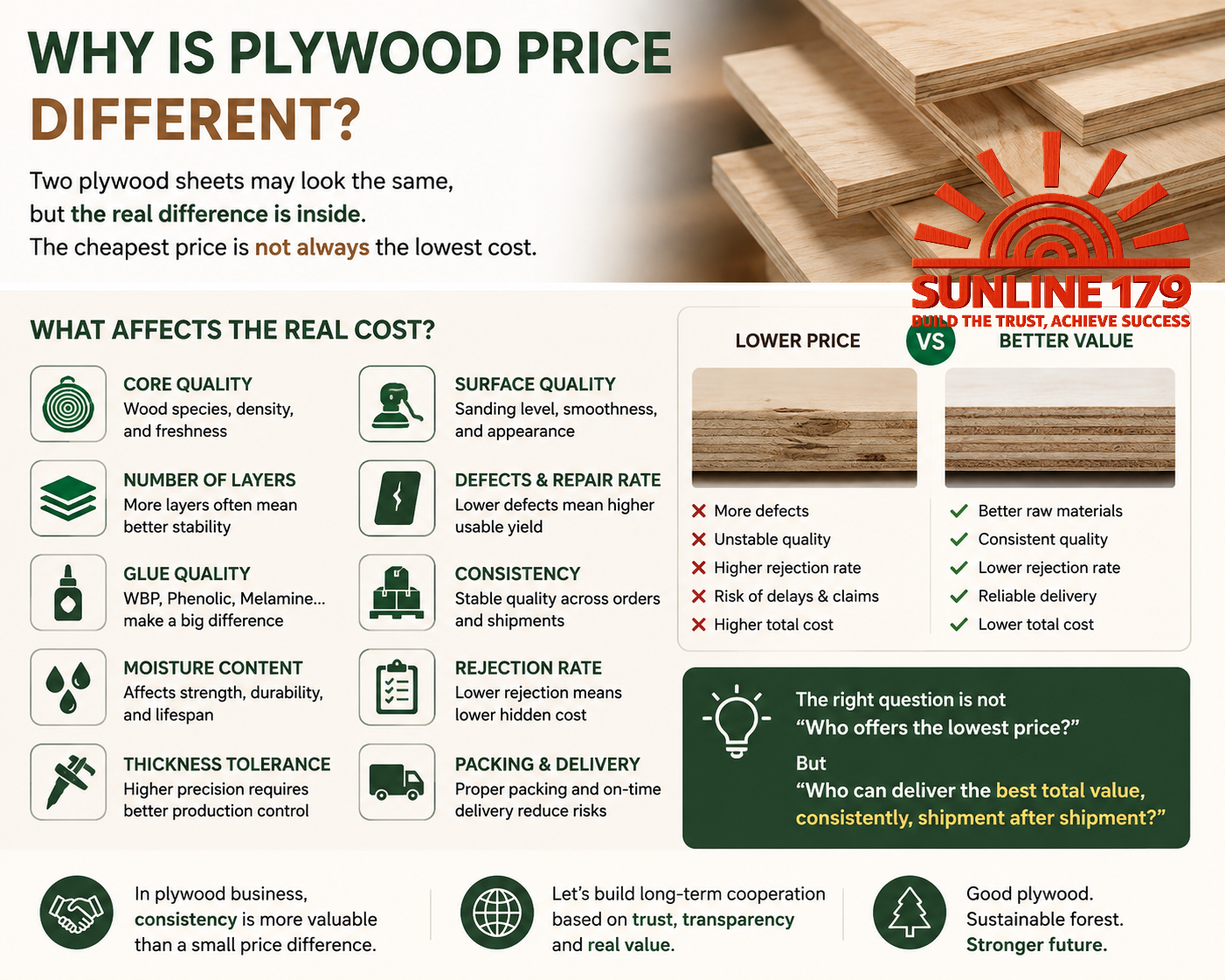
The real cost is affected by:
• Core quality and wood species
• Number of layers
• Glue type and bonding performance
• Moisture content
• Thickness tolerance
• Sanding quality
• Surface defects and repair rate
• Production consistency
• Rejection rate
• Packing and loading
• Delivery reliability
And there is another cost that is often forgotten:
The cost of problems.
A low-priced plywood can become expensive if you have to deal with rejected panels, production interruptions, delayed shipments or complaints from your customers.
For long-term cooperation, I believe the right question is not:
“Who offers the lowest price?”
It should be:
“Who can give me the best total value, consistently, shipment after shipment?”
In plywood business, consistency is often more valuable than a USD 5–10/m³ difference.
I would be very interested to hear from plywood buyers and manufacturers:
What matters most to you when choosing a long-term plywood supplier — price, quality consistency, raw material origin, delivery time, or communication?
Let's share real experiences from the industry.
#Plywood #WoodIndustry #PlywoodExport #WoodProducts #EUWoodMarket #Sourcing #Manufacturing